.png)
The City Beside the City
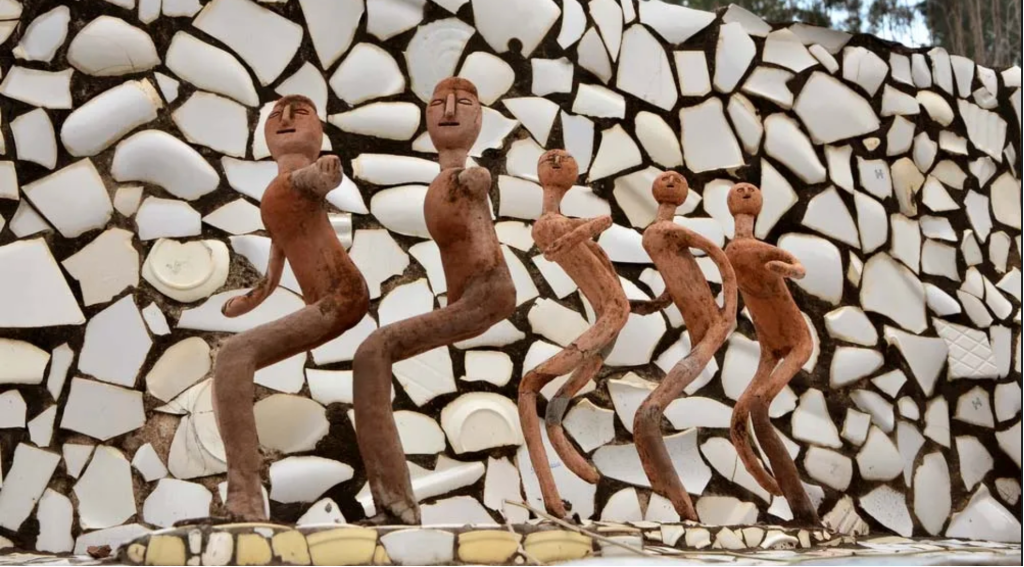
Children running barefoot on roadsides and traffic signals is not a rare sight; we all encounter it a couple of times every day, but a few weeks ago, while I was driving myself to grab some coffee in Mohali, humming to my favourite tune, something unusual caught my attention. This was not just a few children; at least 15-20 children, not over 5-8 years of age, were playing on a busy roadside, some barefoot, some half-clothed. A voice inside me told me something didn't seem right, and I wanted to know more. I pulled over, and what I witnessed next shook me a little. Behind 4-5 small rooms made out of bricks was an informal settlement, also referred to as a "Jhuggi", a small community of around 150 people living in houses made out of tin roofs. I couldn't believe my eyes because the area was camouflaged with trees, making it completely unnoticeable to regular passersby. I went to the kids and asked them about their parents, and that's when the entire scenario made sense to me. Their parents were working on building the mall situated right opposite the road where their jhuggi was located, and they were due for a lunch break in half an hour's time, so in the meantime, I asked the children to give me a tour of their house. I saw clay pots outside their small rooms that were supposed to house an entire family of 4-5 people, clothes hanging out to dry in the middle of the path, makeshift beds supported by a pile of bricks and a plywood board on top, their personal belongings strewn across the floor, and a few half-done toilets that were covered with bricks and had vines growing inside them. My mind was constantly thinking that an entire community existed less than a hundred metres away from a road I had driven on many times before. The duality of life took over me, and I silently absorbed the scene around me.
At around 2 p.m., the workers returned for their lunch break and were intrigued to see a strange person there, and walked towards me. I told them about my curiosity and that I wanted to know more about their daily lives, and so they told me about it – years living away from home, children without education, abysmal wages, unsanitary conditions, no additional support from the "Thekedaar", and threats of being left without a job if they ever complained about not receiving their basic rights as human beings, not as interstate migratory labourers. The fact that, irrespective of the protection of rights granted by the central government for interstate migratory labourers, their conditions remain dire did not surprise me. As the conversation unfolded, the workers spoke about lives that existed in a constant state of movement. Most of them had travelled from Bihar and Uttar Pradesh in search of work and had spent years moving from one construction site to another. For many, the settlement in Mohali was only temporary; once the project was completed, they would pack up their belongings and move wherever work took them next. Home, in the conventional sense of the word, seemed distant. Yet amidst the uncertainty, they had managed to build a sense of community. Women cooked meals together, children played in groups, and neighbours looked after one another while the adults spent long hours at work. What appeared to an outsider as a cluster of tin structures was, in reality, a functioning neighbourhood with its own routines, relationships, and rhythms.
As I listened, I realised that the settlement was not merely a place of hardship but also a place of resilience. The workers spoke of families waiting for them back home, of children they hoped would one day have opportunities they never had, and of the sacrifices that came with migration. Some had not visited their villages in months, while others spoke about festivals spent away from loved ones because travelling home would mean losing wages they could not afford to forgo. Their stories revealed a side of urban development that rarely enters public conversation: the human cost of constantly being on the move in pursuit of economic survival.
As I drove away that afternoon, the image of the settlement stayed with me. A few hundred metres down the road, life returned to normal; cars rushed past, people stepped into air-conditioned cafés, and the city carried on with its usual rhythm. Yet, hidden behind a cluster of trees was an entire community that seemed to exist in a different reality altogether. The workers I met were not asking for sympathy, but many of them looked at me with a quiet sense of hope. Hope that someone was willing to listen. Hope that their experiences mattered. Hope that the realities of their daily lives, often hidden from public view, would not go entirely unnoticed. They were simply trying to earn a living, raise their children, and build a future with the limited opportunities available to them. What struck me most was not their hardship, but their invisibility. Their homes stood in the shadow of a mall they were helping construct, a symbol of growth and aspiration for the city. It made me wonder whether development is only about the structures we build, or also about the lives that build them. Perhaps the true measure of progress lies not in the skylines we celebrate, but in whether we are willing to see the people who make them possible. The city, after all, is not just made of concrete and glass. It is made of stories. It is made of sacrifices, long journeys, and childhoods shaped by circumstances far beyond their control. Some stand proudly in the spotlight, while others remain hidden in plain sight, waiting for someone to stop, look closer, and listen.





.jpg)
.jpeg)